

Most business owners believe ads fail because platforms are expensive or audiences are saturated. What actually happens is more subtle. Ads run, money leaves, results fluctuate, and clarity never arrives.
When ads are treated as a standalone activity instead of part of a system, performance feels random. The issue is rarely ads themselves. It’s disconnection — from the website, from the data, and from who’s actually making decisions.
1. Ads Are Often Asked to Do Too Much
Most ad accounts are quietly carrying four jobs at once: generate traffic, educate a stranger about the product, build enough trust to justify the price, and close the sale — all inside a 15-second impression. When results disappoint, the ad gets blamed for failing at all four, when in reality it was never built to do more than one.
A campaign built to drive awareness gets judged by conversion rate. A campaign built to close warm leads gets judged by cost per click. The mismatch between what the ad was built to do and what it's being measured against is where most “ads aren't working” conversations start — and it's rarely about the ad itself.
Practical example: A shortlet brand runs one campaign to a generic “book now” ad and wonders why traffic is up 40% but bookings haven't moved. The traffic was doing its job — introducing the property. The downstream process built to convert a stranger into a guest as quickly as possible just wanst working effectively.
Fix tasks:
1) Define the ad's single primary goal before writing a line of copy
2) Map that goal to a specific funnel stage (cold, warm, retargeting)
3) Measure the campaign only against the metric that matches its stage — not revenue for a top-of-funnel ad, not reach for a bottom-of-funnel one

2. Traffic Without Intent Is Expensive Noise
Not all clicks are equal, but most reporting treats them that way. A campaign optimized to maximize clicks will get you clicks — from people who were never close to buying. The dashboard looks healthy. The bank account doesn't move.
This is where vanity metrics do real damage: reach and CTR climb, the account “looks” like it's working, and the business owner keeps funding a campaign that's attracting the wrong audience faster and cheaper.
Practical example: A fashion account runs a broad interest-based campaign and gets a strong CTR from bargain-hunters and window shoppers. Checkout starts are high; completed orders are flat. The ad wasn't broken — it was optimized for the wrong signal from day one.
Fix tasks:
1) Shift optimization from clicks/reach to a conversion-adjacent event (add-to-cart, checkout start, lead form)
2) Narrow targeting to intent signals, not just demographic or interest overlap
3) Rewrite messaging so it pre-qualifies — speak to price, use-case, or urgency so unqualified clicks self-select out
3. Ads Can't Fix Broken Websites
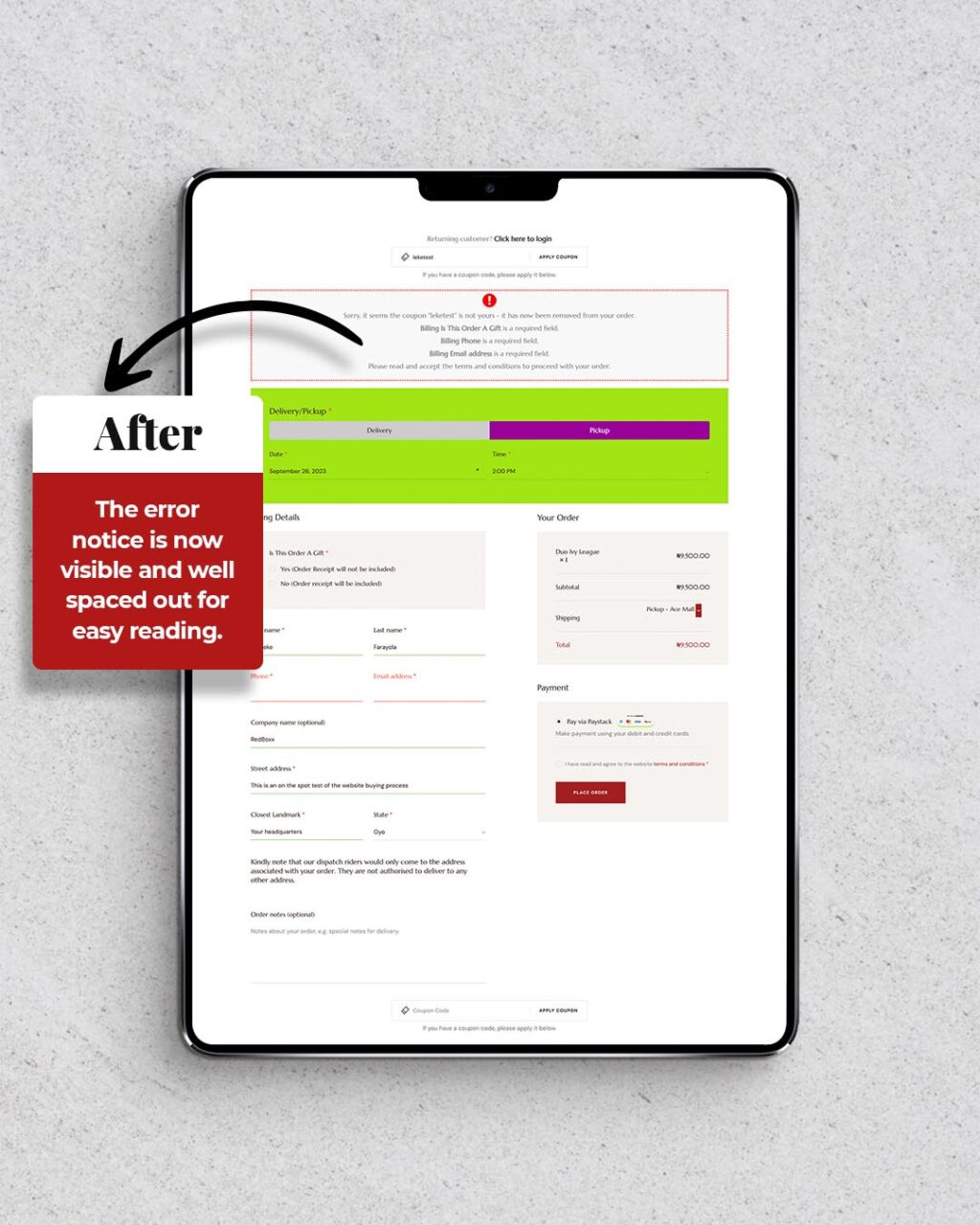
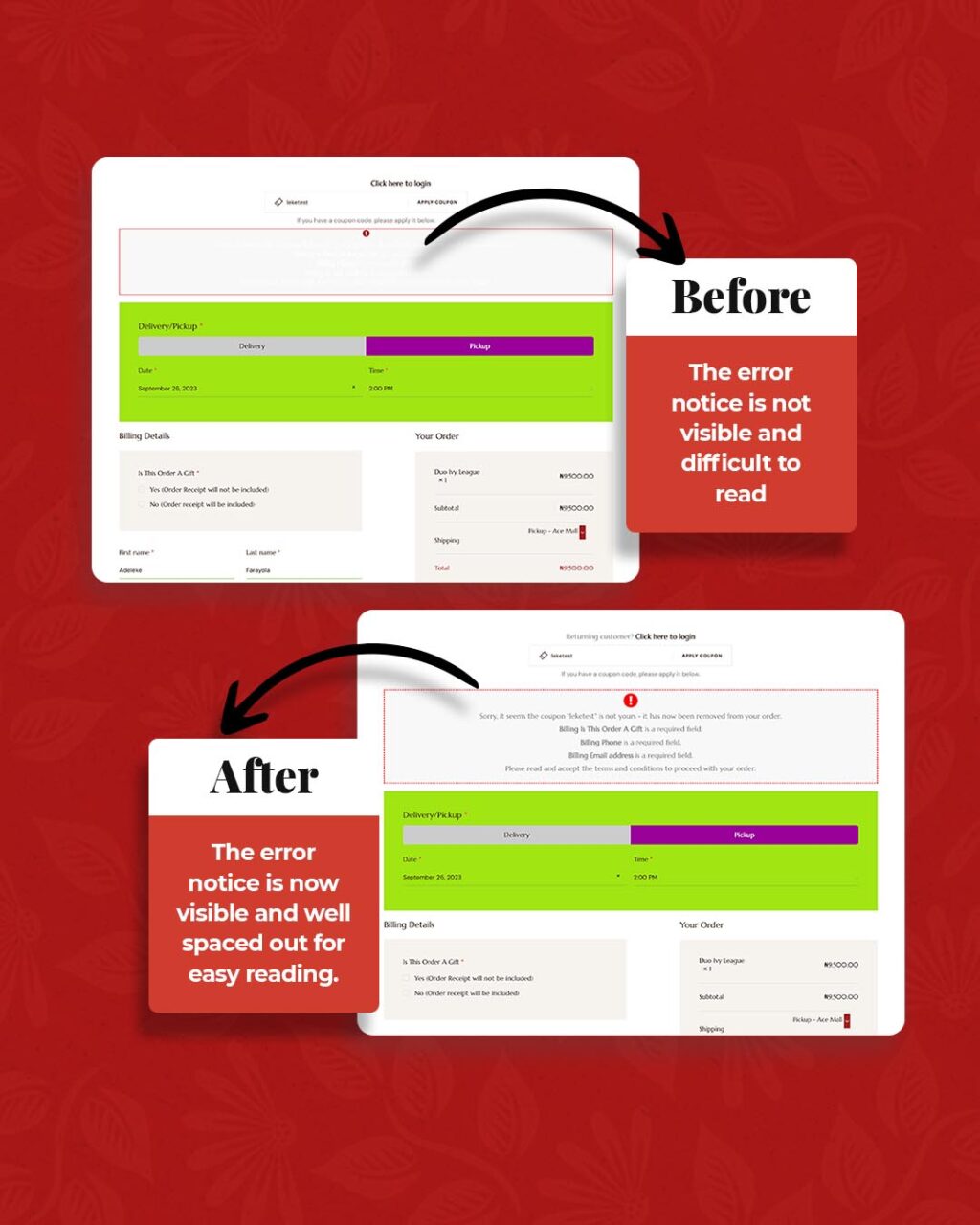
Ads are a magnifier, not a fix. Send more traffic to a page that's slow, confusing, or missing the information a buyer needs, and you don't get more sales — you get more people bouncing, faster, at a higher cost per visitor.
This is the fix most businesses resist, because it's easier to blame the ad account than to admit the landing page has a five-second load time or a checkout flow with an extra unnecessary step.
Practical example: A dessert brand's ad drives a spike in traffic to a menu page that requires three clicks to see pricing. Add-to-cart rate barely moves despite the traffic spike — the friction was there long before the ad ran, the ad just exposed it at volume.
Fix tasks:
1) Audit the exact landing page the ad sends traffic to — not the homepage, the actual destination
2)Time the page load and count the clicks to purchase/booking
3) Fix friction on-site before increasing spend, not after
4. Spend Is Scaled Before Signal Is Fixed
Scaling a budget is supposed to amplify what's working. If the underlying signal — tracking, audience, offer — isn't clean yet, scaling just amplifies the inefficiency instead. Doubling the budget on a campaign with a broken pixel doesn't double the results; it doubles the waste.
This is one of the most common — and most expensive — mistakes: treating “spend more” as a strategy rather than a reward for a system that's already proven itself at a smaller scale.
Practical example: A spa client doubles daily budget after two decent weeks, before checking that the booking confirmation event was even firing correctly. ROAS drops the following month, and the instinct is to blame the platform rather than the tracking gap that was there the whole time.
Fix tasks:
1) Confirm tracking and conversion events are firing correctly before touching budget
2) Identify which specific audience/creative combination is actually profitable — not the account average
3) Scale in increments (20–30%) and hold each new spend level for a full learning cycle before scaling again
5. Platforms Optimize for Activity, Not Profit
Meta and Google are built to deliver whatever outcome you tell them to optimize for — and by default, that's often the cheapest, easiest signal to generate, like a video view or a landing page click, not a completed sale. Left on autopilot, the algorithm will happily fill your dashboard with engagement while your revenue stays flat.
This isn't a platform flaw — it's doing exactly what it was configured to do. The business owner just configured it to chase the wrong thing.
Practical example: A campaign optimized for “engagement” racks up thousands of video views and comments. None of it shows up in the order log, because the platform was never told that a sale — not a view — was the goal.
Task A - Optimize Properly
Configure the ad account to optimize for the revenue event (purchase, booking, qualified lead) — not an upstream proxy
Task B - Review Productive Cost Analysis
Review cost-per-purchase and profit contribution, not cost-per-engagement. It is good to know your other cost analysis points too like cost per engagement, cost per add to cart and cost per checkout, too. Eventually when you want to budget and scale, knowing them will come in handy.
Task C - Don't Take SOme Metrics Too Seriously
Treat vanity metrics (views, likes, reach) as diagnostic, never as success criteria. They are good and useful criteria because they eventually impact success but they are never the key elements.
6. Reporting Without Interpretation Misleads
A spreadsheet full of numbers isn't the same as an explanation. Most ad reports show what happened — spend, clicks, CPM — without ever answering why, which leaves the business owner to fill in the gap emotionally instead of analytically.
That's how a single slow week turns into a panicked campaign shutdown, even when the underlying trend over the past month was healthy.
Practical example: A shortlet brand sees CPMs spike for four days during a platform-wide seasonal ad-cost increase and turns campaigns off in a panic — right before the busiest booking window of the month, based on a blip that had nothing to do with the account itself.
Task A - Work With Trends.
Read trends over either multiple days of at least 1 week windows, not day-to-day swings. This allows you to understand what has happened and somewhat be able to predict what will happen. The best place to start now is gathering data daily.
Task B - Explain The Data That Leads To Trends
Add one line of interpretation to every report: what changed, and why. This context helps everyone interpret data in a more productive way.
Task C - Assign and Take Action
Tie every reported number to a specific next action — a report with no action attached isn't a report, it's noise. Actions should be guided by data, trends and hope. More by data and trends though.
7. Ads Website and Customer Service Teams Work in Silos
When the person running ads and the person managing the site never talk, the feedback loop that should exist between them simply doesn't. Ads insights never reach the website. Website changes never get factored into ad strategy. Both sides optimize in the dark.
This is less a technical problem than an ownership problem — nobody is looking at the whole system, so nobody catches the gap between what the ad promises and what the site delivers.
Practical example: An ads team notices a specific product is driving strong click-through but poor conversion. Without a shared feedback loop, that insight never reaches whoever manages the product page — so the same underperforming page keeps absorbing ad spend month after month.
Task A - Put Someone In Charge
Put one person or process in charge of the full funnel, not just the ad account
Task B - Gather and Share Data
Share performance data across ads and site teams on a fixed weekly cadence
Task C - Have a Goal
8. Creative Isn't Tied to Reality
An ad's job is to make a promise. The website's job is to deliver on it. When the two don't match — the ad shows a lifestyle the product page doesn't reflect, or a price the checkout doesn't honor — trust breaks in the three seconds it takes a visitor to notice the gap, and it rarely comes back.
This mismatch is quiet. Nobody complains. They just leave.
Practical example: An ad promises a “luxury getaway” with polished lifestyle imagery; the booking page shows dated photos and a generic description. The ad did its job driving the click — the mismatch is what kills the booking.
Task A
Task B
Task C
9. Inconsistent Results Signal System Failure
A great month followed by a bad month isn't usually luck — it could be a system with no stable foundation reacting to whatever pressure hit it that month: a promo, a platform cost spike, a competitor's sale. Without something steady underneath, every external shift shows up directly in revenue.
The businesses that look “consistent” from the outside have usually just built a floor that promotions sit on top of, rather than letting every campaign swing on its own.
Practical example: A fashion brand's sales spike hard during a discount push, then crash the following month — because the “baseline” everyone measured against was never a normal month to begin with, it was the promotion.
Task A
Task B
Task C
10. Well Managed Ads Create Predictability
When ads are actually connected — to clean tracking, to a website that delivers on the ad's promise, and to one owner watching the whole system — performance stops feeling like gambling. You start being able to say, in a given month, exactly which campaigns drove revenue and why.
That predictability is the actual product. Not more spend, not more traffic — the ability to know what's working and scale it on purpose.
Practical example: A well-managed account can point to a specific audience-creative pairing driving 60% of monthly bookings, and knows exactly what to double down on next month instead of guessing.
Task A
Task B
Task C
The Wrap Up
If ads feel like gambling in your business, the issue usually isn’t the platform or the budget. It’s disconnection — between the ad, the website, the data, and the person actually making decisions.
We help businesses manage paid ads as part of a complete system — tied to websites, data, and revenue — so results become explainable and repeatable.
Send an email to hello@myredboxx.com today if you want clarity instead of guesswork.